RECAP: Curse of Strahd 25 (11-9-26)
The Battle at Raven River Bridge
The battle to defend Ovidia’s sheep continued in the darkness surrounding her windmill near Raven River Bridge. The adventurers had prepared a defensive perimeter of hay bales, hoping to funnel the marauding wolves into a manageable killing ground. Unfortunately, the attackers had proven more numerous and dangerous than expected. Among the ordinary wolves lurked a werewolf, whose unnatural resilience made it a far more formidable opponent.
Grughilda and Tenzin confronted the werewolf along the riverbank, while the other adventurers struggled to contain the wolves threatening the sheep and the covered bridge. Ovidia contributed arrows from a distance, while Hex, positioned atop the bridge, employed elemental magic to terrorize the wolves below. Flames from an ignited grease spell complicated matters, threatening the bridge itself even as they discouraged the attackers.
The werewolf proved exceptionally difficult to subdue. Although Grughilda’s weapon repeatedly tore into its flesh, its wounds began knitting together almost immediately. Tenzin, meanwhile, delivered a series of devastating blows that sent the creature sprawling unconscious into the river.
Rather than allowing it to float away, Tenzin waded into the cold water, seized the creature, and attempted to drown it. The werewolf briefly regained consciousness and struggled against him, but Tenzin maintained his grip and forced its head beneath the surface. When Grughilda’s subsequent attacks rendered it unconscious once more, Tenzin dragged it toward the bank.
There followed a particularly brutal and somewhat undignified attempt to keep the creature incapacitated, with Tenzin repeatedly striking its most vulnerable anatomy while Grugilda continued attacking it with her weapon. Despite their extraordinary punishment, the werewolf continued regenerating, making it increasingly clear that ordinary steel would not provide a permanent solution.
Elsewhere, the battle began turning decisively against the wolves. Velkro employed magically conjured metal needles, while Iggy ignited several attackers. Hex rained fire and elemental magic from the roof of the covered bridge, scattering wolves that had initially gathered beneath him.
Iggy also found an ingenious solution to the burning grease threatening the bridge. By directing Faline to shower the flames with magically conjured sand, he smothered the fire and rendered the slippery ground passable once more.
The final collapse of the wolf pack came through Zandarius’s particularly spectacular contribution. Having summoned a shrike, he sent the small bird flying toward the wolves retreating along the bridge approach. He then channeled destructive magic through his summoned servant, sacrificing the bird in a tremendous fiery explosion that killed or scattered several wolves.
The blast was accompanied by Ovidia’s horrified cry:
“DON’T BLOW UP MY BRIDGE!”
Fortunately, the bridge survived.
With the remaining wolves either dead or fleeing into the darkness, the adventurers turned their attention to the still-unconscious werewolf. Grughilda recovered a beautifully crafted silver-tipped arrow that Ovidia had used against it, noting that the wound it inflicted had not regenerated like the others.
Rather than risk allowing the creature to recover, the adventurers finally dispatched it through the sustained application of magical fire. Its body burned until there was no further sign of life.
At last, Ovidia’s sheep were safe.
Ovidia’s Hospitality
With the battle concluded, Ovidia expressed her considerable gratitude. She admitted that she had not realized a werewolf was directing the pack and suspected that its influence explained why the normally manageable predators had begun attacking her livestock in such extraordinary numbers.
There remained, however, a serious concern. Grughilda had suffered a bite from the werewolf.
Ovidia examined the wound and warned that it might carry the Curse of lycanthropy. Returning to her windmill, she prepared a pungent paste from wolfsbane and other ingredients, carefully applying it to the injury. She believed that the treatment might prevent the curse from taking hold, but insisted that the adventurers remain overnight so she could assess Grughilda’s condition in the morning.
The party, together with the Oronova refugee family, accepted her hospitality. Although the interior of the windmill was cramped and crowded with herbs, supplies, and curious implements, Ovidia promised that no evil could cross its threshold. Ancient protective symbols inscribed upon the door lent weight to her assurances.
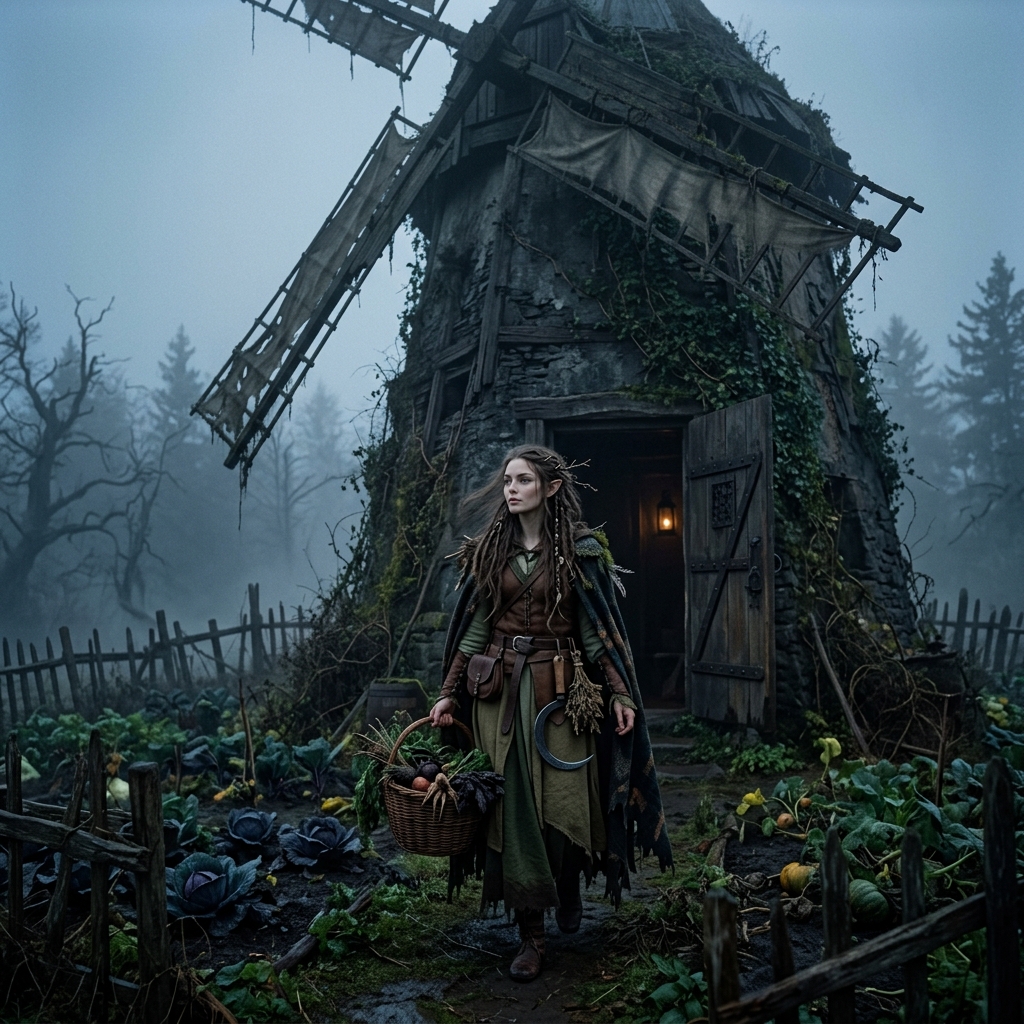
The night passed peacefully.
By morning, the windmill was filled with the welcome smells of breakfast. Ovidia had prepared eggs, tea, and a hearty meal for her guests. She had also assembled several gifts in appreciation for their assistance.
The first was a supply of salted mutton, taken from one of her own sheep, to sustain the travelers on their journey. More valuable still was a sealed jar of restorative ointment, a remarkable preparation capable of treating wounds, poisons, and diseases.
When Ovidia removed the hardened wolfsbane poultice from Grughilda’s arm, she found the wound healing satisfactorily. Although she believed the curse had been averted, she provided two additional sprigs of wolfsbane for use should any symptoms emerge.
The adventurers also questioned Ovidia about her silver arrow. She explained that it was the last of three arrows crafted by elves living to the north, originally given to her mother in gratitude for a service rendered long ago. Two had been lost over the years, leaving only the precious remaining arrow.
Ovidia spoke of the northern elves’ extraordinary skill in finding and working silver. According to legend, their knowledge had made them among Strahd’s earliest targets when he conquered Barovia. The Count understood the danger posed by silver weapons and had systematically attacked those capable of producing them.
This revelation reinforced the adventurers’ growing understanding of why silver was so scarce throughout the land.
A Wagon of Provisions
Before the party departed, Ovidia proposed a mutually beneficial arrangement.
Ordinarily, merchants and provisioners from Krezk visited her farm to purchase food. However, she had not seen them for some time. Concerned about the interruption, and aware that the city needed provisions, she offered the adventurers an entire wagon of food for half its customary value.
The wagon, which normally would have brought approximately sixty gold pieces, would be theirs to sell in Krezk for thirty. They would retain whatever proceeds they could negotiate, provided they eventually returned her wagon and horse.
The party agreed, although they elected to pay through barter rather than coin. Ovidia accepted a decorated dagger valued at twenty gold pieces and two amber stones valued at five gold pieces each.
The amber particularly delighted her. She explained that it was a rare and valuable component in certain magical rituals she had been unable to perform for years. With its acquisition, she anticipated a particularly favorable harvest the following spring.
Ovidia loaded the wagon with salted meats, vegetables, eggs, and other produce. Anton Oronova volunteered to drive it, attaching his family’s smaller wagon behind. His wife Tereska and their children, Alana and the infant Valentina, would accompany him.
The travelers departed with Ovidia’s blessings, leaving behind the strange but generous woman whose windmill had provided an unexpected refuge in the wilderness.
The Walls of Krezk
The road to Krezk proved relatively uneventful. Wolves could occasionally be heard howling in the surrounding forests, but none approached the travelers.
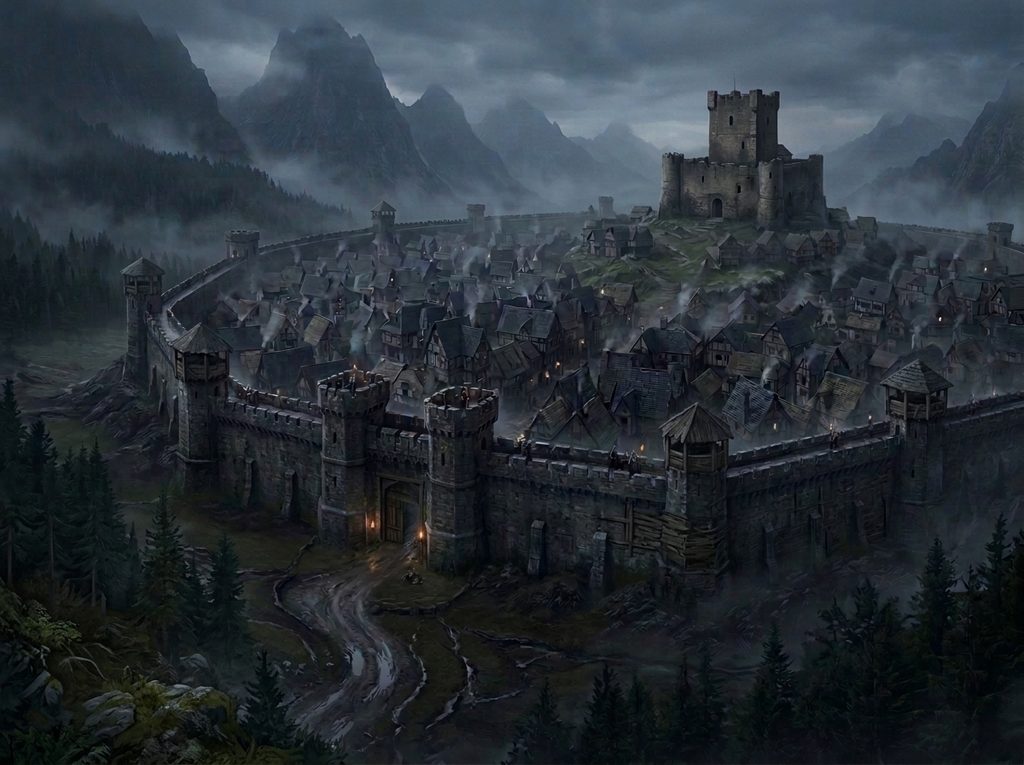
Late in the day, the adventurers emerged from the wooded hills and caught their first glimpse of the walled city.
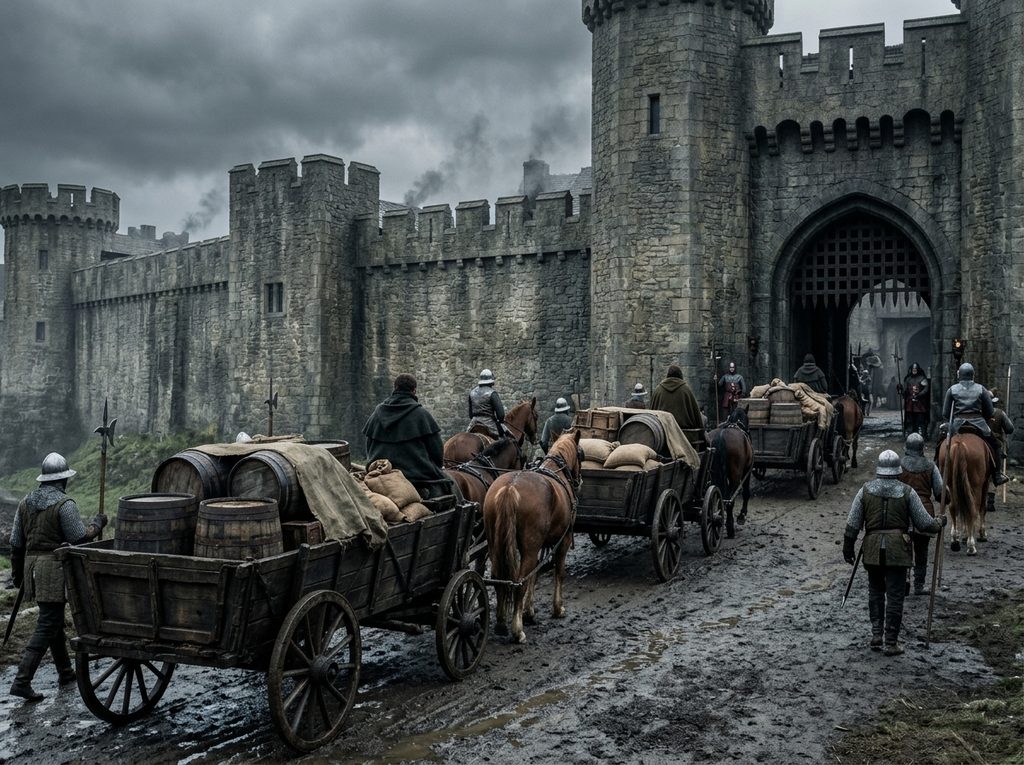
Krezk presented a striking contrast to the settlements they had previously encountered. Substantial stone walls enclosed the town, while a fortified keep overlooked it from the mountainous terrain beyond. Armed guards patrolled the battlements, and the gate was busy with wagons bringing food, supplies, and new arrivals.
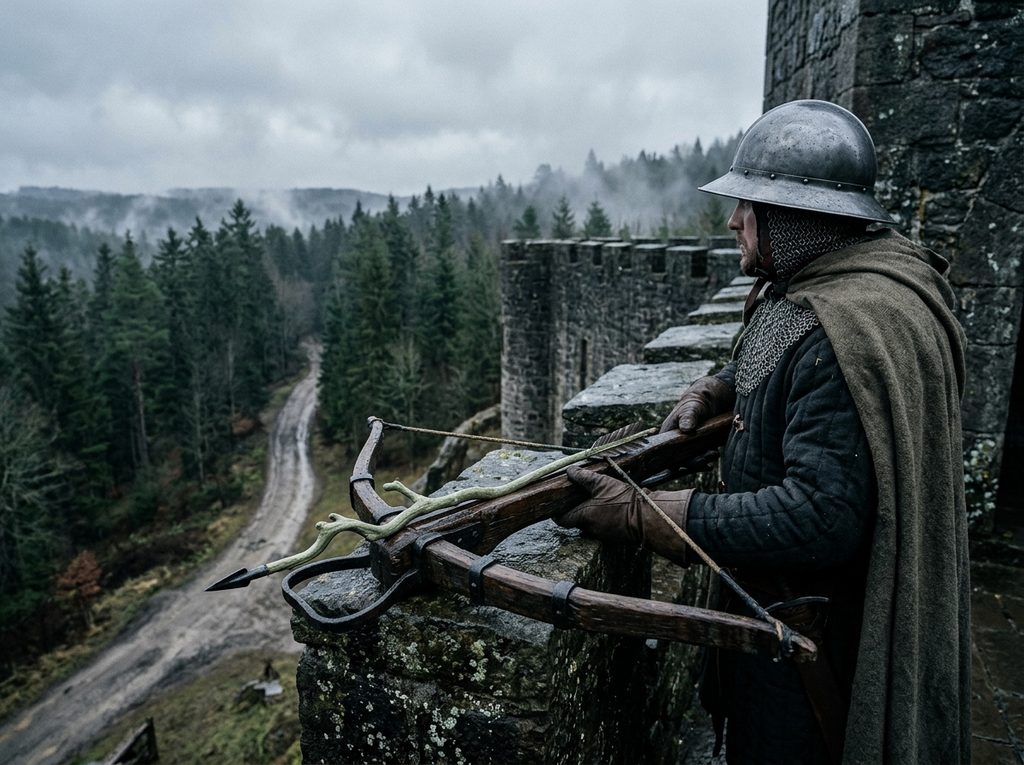
The adventurers noticed that many of the guards carried unusual crossbow bolts. Rather than straight wooden shafts, these bolts appeared to have curved wooden bodies and large black points. Their purpose was unclear, although the party suspected that the materials might be intended for use against supernatural enemies.
More immediately curious was the green light periodically flashing from within the gatehouse.
As the adventurers approached, they discovered that Krezk maintained a carefully organized system for admitting travelers. Food wagons were inspected and documented, while refugees underwent examinations conducted by an official carrying a peculiar glowing implement.
Some refugees were admitted directly. Others were escorted elsewhere by guards, although without the rough treatment the adventurers might have expected.
Despite their suspicions, the process appeared orderly and surprisingly humane.
The Examination of Kaspar
The adventurers were greeted by a guard who welcomed their delivery of food but explained that unfamiliar travelers must undergo quarantine and medical examination before entering the city.
This requirement assumed additional importance when the party disclosed their recent encounters with wolves and vampires.
They were directed to Kaspar, a physician stationed in the gatehouse.
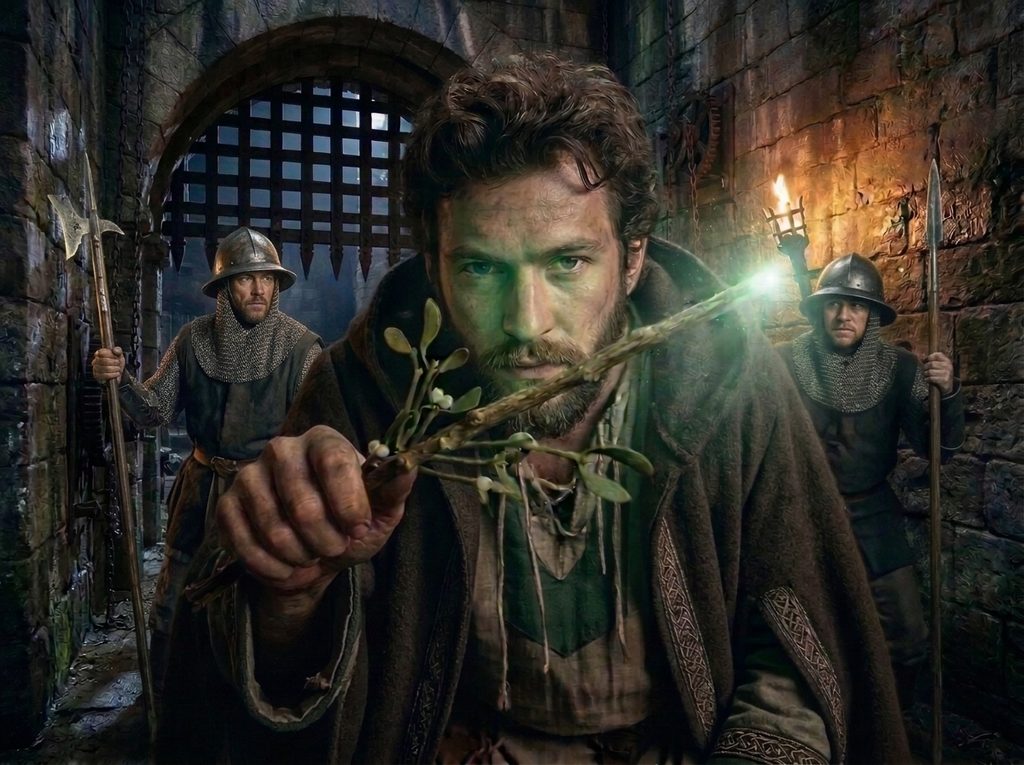
Kaspar’s instrument proved to be a living branch of mistletoe, which produced a soothing green light when activated. By passing it before someone’s eyes and over their body, he could apparently detect evidence of supernatural infection.
He first examined the Oronova family.
Anton showed signs of infection from the bite he had suffered at the hands of one of Vallaki’s corrupted constables. His daughter Alana also displayed symptoms, apparently resulting from a scratch inflicted during their escape.
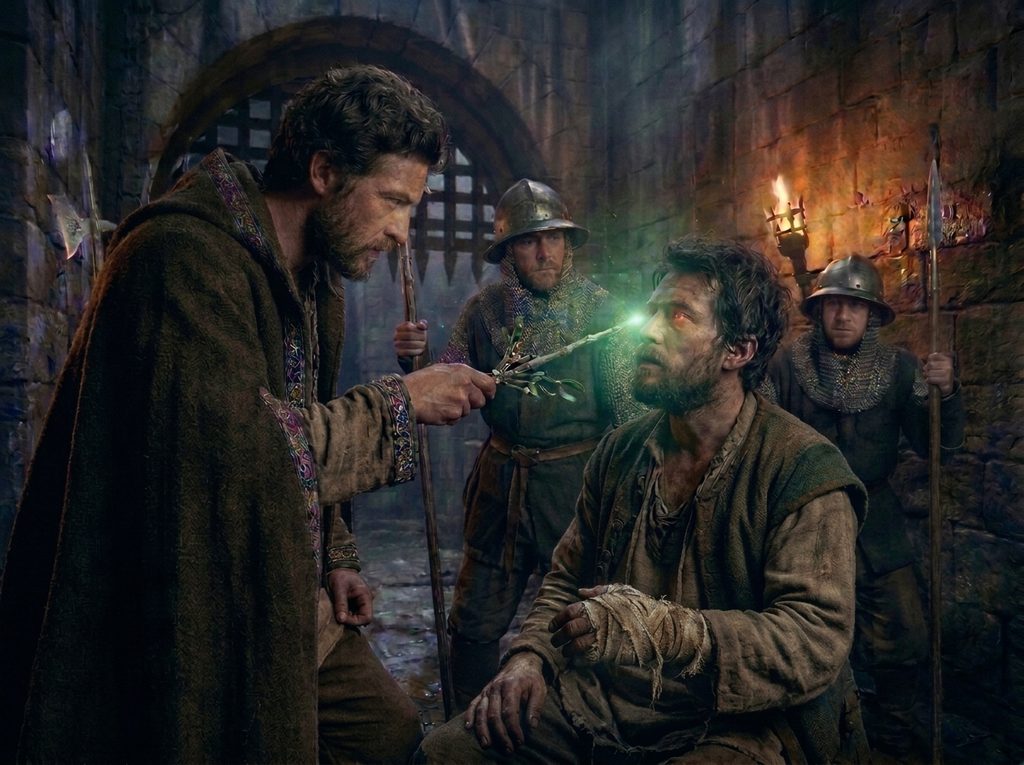
Kaspar explained that both carried minor vampiric infections, but assured Tereska that the conditions were treatable. Rather than separating the family or treating them as dangerous prisoners, he arranged for Anton and Alana to receive medical attention while allowing Tereska and Valentina to accompany them.
He also promised that the family would receive food, accommodation, and assistance in settling within the city.
Before departing, Anton thanked the adventurers for bringing his family through the dangerous countryside. He promised to repay their kindness should the opportunity ever arise.
The adventurers then underwent their own examinations.
Tenzin and Akuta showed traces of their previous ghoul fever, although Caspar determined that the disease had passed without lasting consequences. The others generally appeared healthy, but Grughilda’s recent werewolf bite and Hex’s previous encounter with a vampire required additional attention.
Kaspar was impressed by the quality of Ovidia’s treatment and expressed relief to learn that she was still alive and well at Raven River Bridge. He acknowledged that Krezk had been unable to maintain its customary provisioning journeys to her farm, and promised to encourage renewed contact.
For Grughilda and Hex, he recommended further examination by the herbalist Caedmon.
A City Under Strain
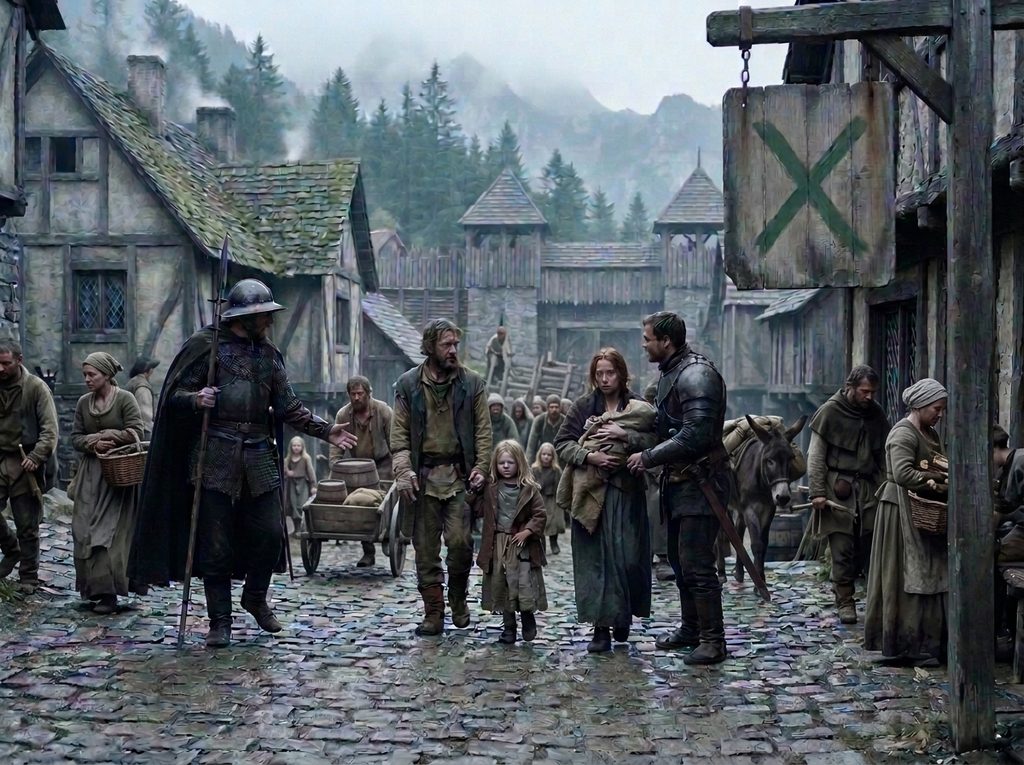
Once admitted through the gate, the party found Krezk astonishingly crowded.
The city, which might ordinarily have accommodated six or seven hundred people comfortably, appeared to contain perhaps twice that number. Buildings had been expanded upward, with new upper floors constructed to provide additional space. The streets were crowded with residents, workers, guards, and refugees from across Barovia.
Yet despite the extraordinary pressure upon its resources, Krezk seemed determined to maintain order and provide for those seeking safety.
Administrative personnel directed refugees toward accommodation, food distribution, and employment. Those possessing useful skills were encouraged to find work, while laborers were organized into groups responsible for gathering wood, hunting, trapping, and other essential services.
The city’s guards made clear that no one would be abandoned, even if comforts were scarce. A roof and a meal were promised, if not necessarily a proper bed.
The adventurers also learned of Krezk’s religious community.
The New Abbey, dedicated to the Morninglord, served both as a religious sanctuary and an infirmary. It had been established by survivors of the old Abbey of Saint Markovia, which lay in the mountains north of the city. That original religious house had fallen to Strahd’s creatures several years earlier, forcing its surviving sisters to seek refuge behind Krezk’s walls.
The party retained an interest in visiting the New Abbey, particularly as they had business with its religious community.
For the moment, however, their medical examination remained unfinished.
Caedmon’s Remedies
Caedmon proved to be a cheerful and knowledgeable herbalist whose shop was marked by a large green “X” symbol.
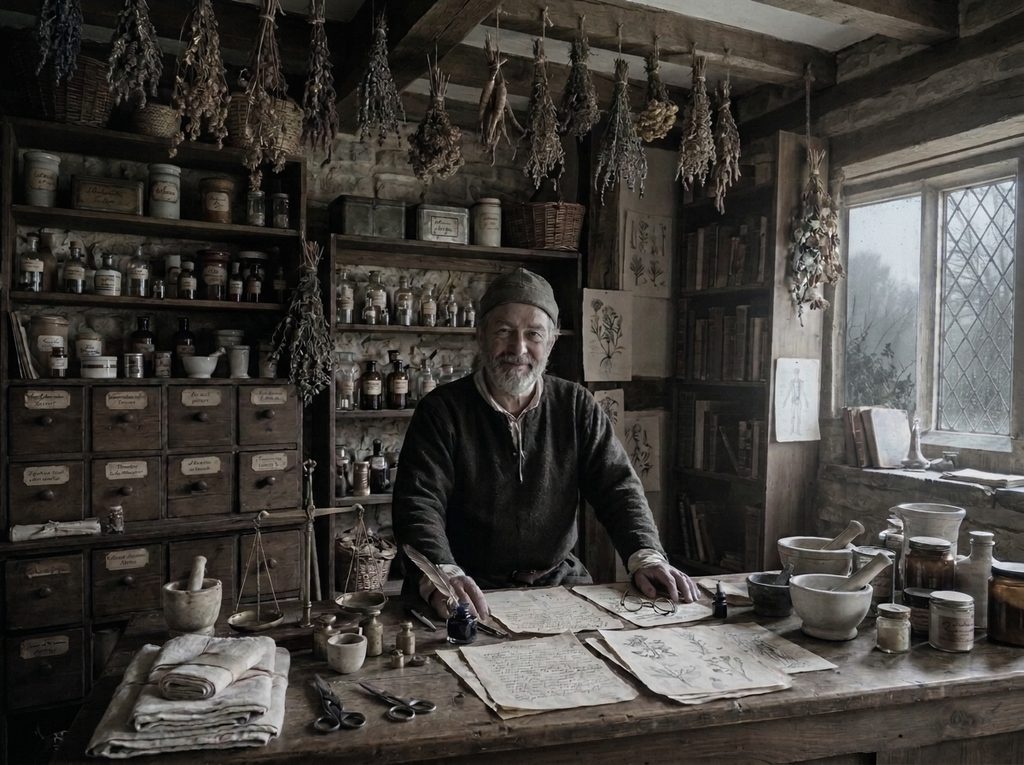
After examining Grughilda, he provided additional wolfsbane and prescribed a four-day course of treatment. She was to crush the dried leaves, sprinkle them over her evening meal, and consume them while offering a prayer to the Morninglord. On the fifth day, she was to return for another examination.
Hex received a different remedy. Caedmon prepared a small vial containing a purplish liquid, carefully sealed with wax. Hex was instructed to drink half the potion that evening, one quarter the following day, and the remainder on the third day. The treatment was intended to eliminate any lingering effects of his vampire bite.
The physician cautioned Hex to return immediately should he experience unusual sensitivity to blood, strange physical reactions, or other signs of developing infection.
Perhaps most remarkably, Caedmon requested no payment.
Throughout the shop, other patients received treatments and medicines without any apparent exchange of money. In a land where suffering was so often exploited, Krezk’s apparent generosity continued to astonish the travelers.
Captain Stefan Borislav
With their medical needs addressed, the adventurers were escorted to Krezk’s administrative center to meet Captain Stefan Borislav.
Borislav served as a senior authority in the city, responsible for much of its civil administration beneath the Burgomaster. He welcomed the adventurers but was particularly interested in their recent experiences in Vallaki.
The city had been receiving increasing numbers of refugees from that direction, and the captain was deeply concerned.
He explained that thirty-three people had arrived from Vallaki during the preceding eleven days. Of these, twenty-four were children, while three others were too old or infirm to work.
Every new arrival placed further demands upon the city’s increasingly strained supplies.
The adventurers confirmed his worst fears.
Vallaki had effectively fallen under the control of vampires and the Wachter faction. The city’s gates had been sealed, preventing its inhabitants from escaping, and terrifying accounts of a blood tax were circulating among those who had managed to flee.
They also reported the corruption of the city’s religious leadership and the flight of the nearby Vistani.
Borislav listened with growing concern. Although the city’s resources were already stretched thin, he expressed the hope that more of Vallaki’s inhabitants might still escape to safety.
He also recognized that the adventurers represented something Krezk badly needed: capable, well-armed individuals accustomed to facing the horrors beyond its walls.
He encouraged them to consider lending their skills to the city’s defense and survival.
The Silver-Sniffing Aghog
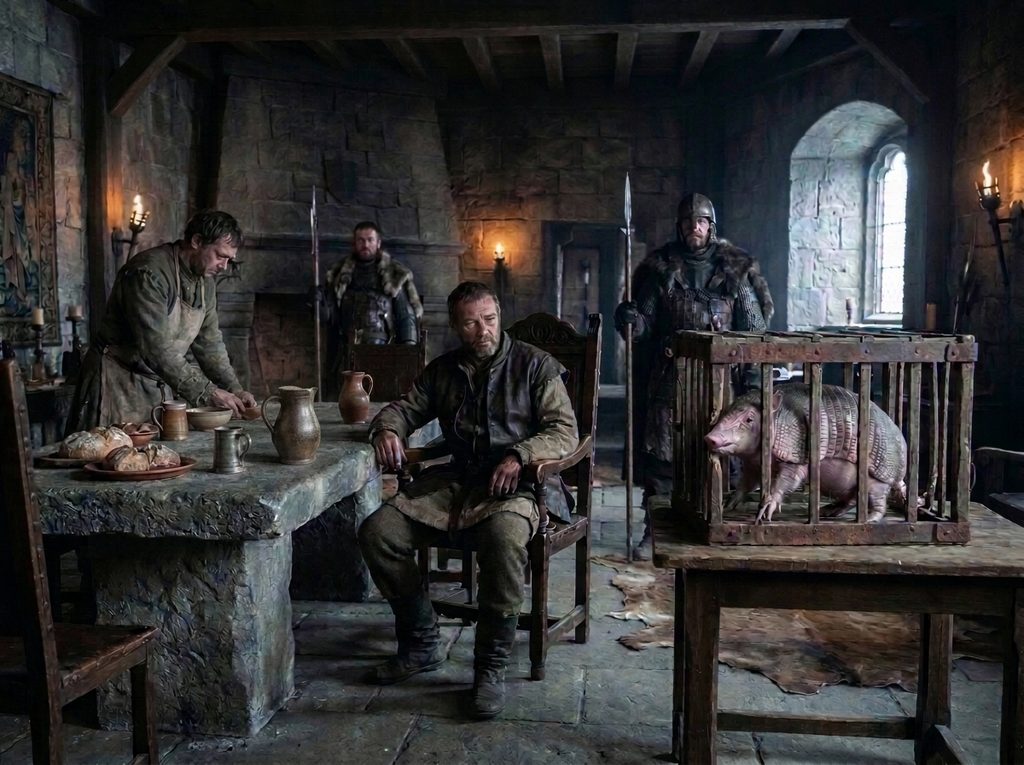
As the conversation drew toward its conclusion, the adventurers became aware of a strange animal occupying the captain’s chamber.
The creature resembled a peculiar cross between a pig and an armadillo. It had become increasingly agitated and excited since the adventurers entered.
Borislav identified it as Elmaro, an aghog.
The captain explained that aghogs possessed a remarkable natural ability to detect silver, even when buried beneath the ground. Krezk employed these creatures to locate hidden deposits of the precious metal, which was desperately needed in the struggle against Strahd’s servants.
Elmaro’s excitement, however, suggested something rather unusual.
According to Borislav, the creature indicated that the adventurers themselves were carrying a considerable quantity of silver.
Given the metal’s extraordinary rarity in Barovia, the captain was understandably curious about how they had acquired such a valuable supply.
It was a question the adventurers were not yet prepared to answer. And there, with Captain Borislav’s curiosity unresolved, the session concluded.