RECAP: Curse of Strahd 26, 11-22-26
A Refuge in the Shadow of Strahd
Having survived their journey from the ruins of Vallaki, the adventurers found themselves in the fortified town of Krezk, one of the last remaining settlements openly resisting Count Strahd’s dominion.
Krezk was a city under extraordinary strain. Its population had nearly doubled as refugees fled the horrors overtaking western Barovia. Streets were crowded, buildings had been enlarged with hastily constructed upper stories, and wagons carrying food and supplies passed constantly through the gates. Yet unlike Vallaki, where suspicion and political corruption had ultimately created an opportunity for Strahd’s servants, Krezk appeared to possess something resembling effective government.
Its inhabitants were not merely surviving; they were cooperating. The town’s guards wore substantial metal gorgets designed to prevent vampires from biting their throats. Sharp spikes projected from rooftops, discouraging airborne vampires from landing. Strict quarantine procedures ensured that newcomers were examined for vampiric infection, lycanthropy, and other supernatural afflictions. The adventurers had already experienced these precautions firsthand. Caspar, one of the town’s medical examiners, had identified lingering evidence of several previous encounters with undead and lycanthropes. Dr. Cademan subsequently prescribed treatments, most importantly additional wolfsbane for Grugilda’s recent werewolf bite. Neither physician had demanded payment.
Krezk was an impoverished town struggling to feed its people, but its medical services were being provided according to need rather than wealth. The party had also assisted the Oronova family in reaching safety. Anton and his daughter required additional treatment following their experiences in Vallaki, but the guards had escorted the family to medical care rather than separating or imprisoning them. The adventurers had good reason to be cautious after their experiences in Vallaki. So far, however, Krezk appeared to be precisely what it claimed: a genuine refuge. And its leaders desperately needed capable allies.
Captain Borislav and the Silver Sword
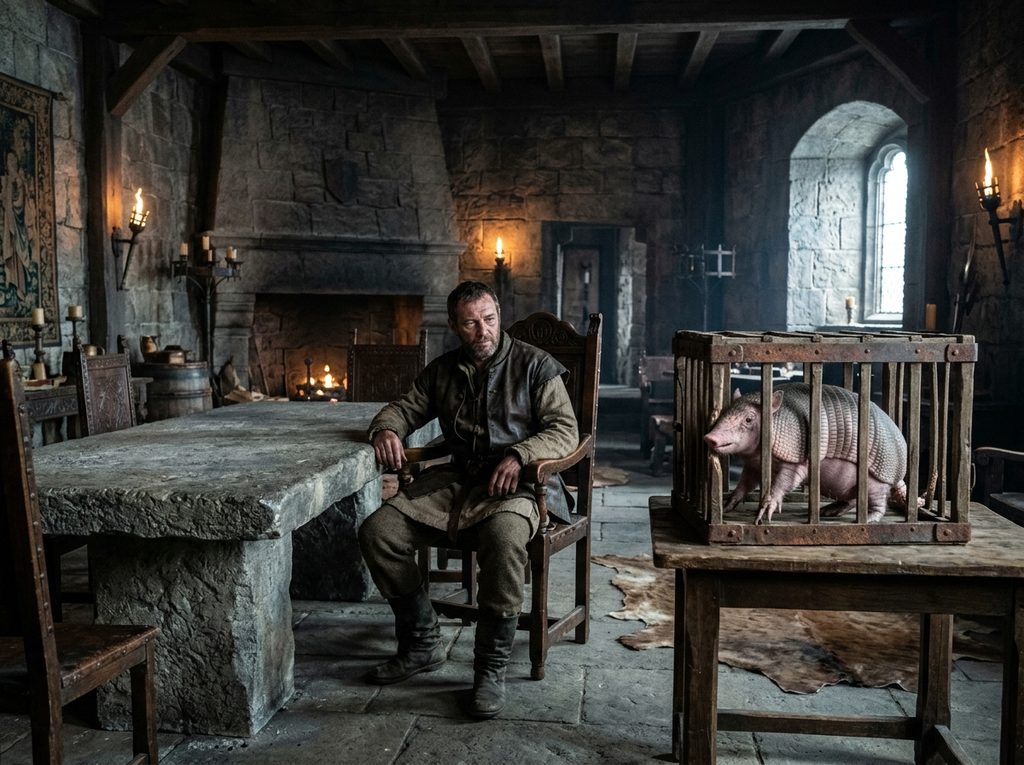
The session resumed with the party meeting Captain Stefan Borislav, the senior official overseeing much of Krezk’s daily administration. Borislav had welcomed the adventurers and questioned them about the conditions in Vallaki. Their account confirmed some of his worst suspicions. Over the previous eleven days, thirty-three refugees had escaped Vallaki and reached Krezk. Twenty-four were children, while three others were elderly or too infirm to work. These refugees represented an additional burden on Krezk’s already stretched food supplies, but Borislav was determined that they should be sheltered.
He was equally interested in the adventurers’ apparent competence. The party had traveled roads that were becoming increasingly dangerous, fought supernatural enemies, and delivered a wagon of provisions from Ovidia’s farm. Such individuals were rare enough that Borislav immediately recognized their potential value to the city’s defense.
His curiosity became more intense when his unusual pet began behaving erratically. Elmaro, an aghog, resembled a cross between an armadillo and a pig. The creature possessed a remarkable ability to detect silver, making its species invaluable in Barovia, where deposits of that metal were exceedingly rare. Krezk employed aghogs to locate small amounts of silver in the mountains. Whatever the searchers recovered was carefully smelted and fashioned into arrowheads or crossbow bolt tips. Elmaro’s increasingly excited behavior suggested that the adventurers possessed considerably more silver than Borislav was accustomed to seeing.
After some reluctance, Akuda displayed his silver sword. Borislav examined the blade with undisguised astonishment. He had never seen so much silver incorporated into a single weapon. The amount was almost unimaginable in a land where ordinary silver ammunition was made with the smallest possible quantity of the precious metal. Borislav returned the weapon without hesitation, assuring the party that he had no interest in taking it. Nevertheless, he made an extraordinary offer: should Akuda ever decide to sell the sword, Borislav wished to receive the first opportunity to purchase it. The captain understood its value not merely as a weapon but as an instrument capable of killing the creatures that threatened his people. The sword was also a reminder of the terrible cost of the party’s adventures. Its maker, a Vallakian smith, had subsequently been murdered, apparently in retaliation for aiding the adventurers. Only his severed sword arm had been recovered.
Borislav expressed his admiration for the adventurers and welcomed them to Krezk, provided they shared the town’s opposition to Strahd. He also offered practical assistance. The party needed lodging, and he knew precisely where they might find it.
An Introduction to the Hearth and Lantern
Borislav provided a written introduction to his friend Miklos, proprietor of the Hearth and Lantern, Krezk’s only remaining operating inn. The captain warned that accommodations were scarce. Much of the establishment had been requisitioned to house refugees, often at little or no expense to its owner. When the party explained that they could pay for their lodging, Borislav seemed visibly relieved. Krezk’s administrators were attempting to shelter everyone who arrived, but the number of people needing assistance was approaching the limits of what the town could provide.
Before departing, the adventurers asked about the Sisters of the Morninglord and a metalworker capable of handling a particularly delicate commission.
Borislav directed them to Mother Izabela Svobodo, superior of the New Abbey, and to Grilsha, a dwarf working at Boram Forge.The party decided to visit the New Abbey first. They had something precious to deliver.
The Sisters of the New Abbey
The New Abbey was not merely a religious institution. It was Krezk’s principal hospital. As the adventurers approached, they encountered a constant procession of wounded and sick refugees. Sisters dressed in dark blue habits hurried between patients, carrying medical supplies in satchels and directing assistants. Children helped by fetching water, bandages, and other necessities. Many patients lay on makeshift beds or mats, while others hobbled about with improvised crutches. A wagon arrived carrying badly injured people, prompting an immediate response from the sisters and their assistants. The entire compound had been converted into a crowded medical facility. Beds filled nearly every available room, and the smell of soap and hot water testified to ongoing efforts to maintain cleanliness. Despite the enormous burden, the institution appeared orderly and compassionate.
A young assistant eventually escorted the adventurers to Mother Izobela. The mother superior was younger than they had expected, perhaps in her late thirties or early forties, although noticeably older than most of the surviving sisters. Blood stained the sleeve of her blue habit, evidently acquired while treating patients. The adventurers explained that they carried something from Father Lucian of Vallaki and requested an opportunity to speak privately. Izabela immediately recognized the name. Father Lucian had once been her teacher. She led the party upstairs to a cramped office, where the adventurers placed a substantial wooden box upon her desk. Within it lay the sacred bones of Saint Andral.
The Bones of Saint Andral Find a New Home
Mother Izabela immediately recognized the significance of the box. She knew that the bones had protected Father Lucian’s church in Vallaki for many years, and she could hardly believe that he would willingly surrender them. Her astonishment turned to horror when the adventurers explained what had happened. The Church of Saint Andral had fallen to Strahd’s creatures and subsequently burned during the fighting in Vallaki. Izabela was devastated. She had studied under Father Lucian some twenty years earlier, and the destruction of his church was more than a distant tragedy. It was the loss of a place and a spiritual community to which she remained personally connected.
When she opened the box and examined the relics, however, her grief was tempered by relief. At least the bones had survived. The adventurers explained that Father Lucian had entrusted them with taking the relics somewhere safe. Izabela admitted that she could not guarantee Krezk’s safety, but the presence of the bones might improve the town’s prospects. Although she placed her faith primarily in the Morninglord, she acknowledged Father Lucian’s belief that the relics had kept Strahd’s minions away from his church. If that belief was justified, their arrival in Krezk could prove extraordinarily important.
She summoned two young assistants and ordered them to carry the box into the abbey’s basement, place it somewhere secure, and guard it until she could attend to it herself. Her gratitude was sincere. She thanked each adventurer personally, embracing them and acknowledging the difficulty of transporting such a valuable relic across Barovia. The party had accomplished something of genuine spiritual and strategic significance. The bones that had once protected the Church of Saint Andral now rested in the care of Krezk’s surviving Sisters of the Morninglord. The adventurers declined further assistance, recognizing how badly the hospital needed its limited resources. Their next destination was Boram Forge.
Grilsha Double-Dagger and the Art of Silverworking
The smithy was a busy establishment, filled with dwarven metalworkers engaged in a variety of tasks. From behind the counter emerged Grilsha Double-Dagger, an elderly dwarf woman with gray hair, a pronounced limp, and an authoritative manner. She was especially delighted to encounter Grughilda. Dwarves had become increasingly uncommon in Barovia, and Grilsha enthusiastically embraced the younger woman, remarking upon the rarity of meeting another member of their people.
She explained that many dwarves had once lived in the surrounding mountains, but repeated attacks by werewolves and other creatures had greatly reduced their numbers. Grilsha admired Grughilda’s chainmail, recognizing it as quality craftsmanship, and was pleased to learn that dwarven smiths still practiced their trade in Vallaki.
When the adventurers explained that they required a discreet commission, Grilsha led them into a secluded area beside the forge. There, they produced a silver letter opener recovered from Durst Mansion. Grilsha immediately recognized its composition. In Barovia, even a seemingly insignificant object made from substantial quantities of silver represented a small fortune. The party explained that they wished to divide the metal into two useful items. First, they wanted a pair of silver-studded hand coverings suitable for Tenzen’s unarmed fighting style. Second, they needed a small quantity of silver that Velkro could employ with his Needle Darts spell, allowing the magical projectiles to exploit enemies vulnerable to silver.
Grilsha agreed to the work. She proposed a modest fee: enough silver to produce approximately three crossbow bolt tips, a relatively small payment considering the value of the commission. She estimated that the work would require three days.
The adventurers also asked that the metal in the hand coverings be darkened, making the silver less conspicuous. Grilsha readily agreed. In a country where silver was so valuable, openly displaying it could attract attention as readily as it attracted the hatred of vampires and werewolves. With the commission arranged, the party finally turned its attention to securing a place to sleep.
Hospitality at the Hearth and Lantern
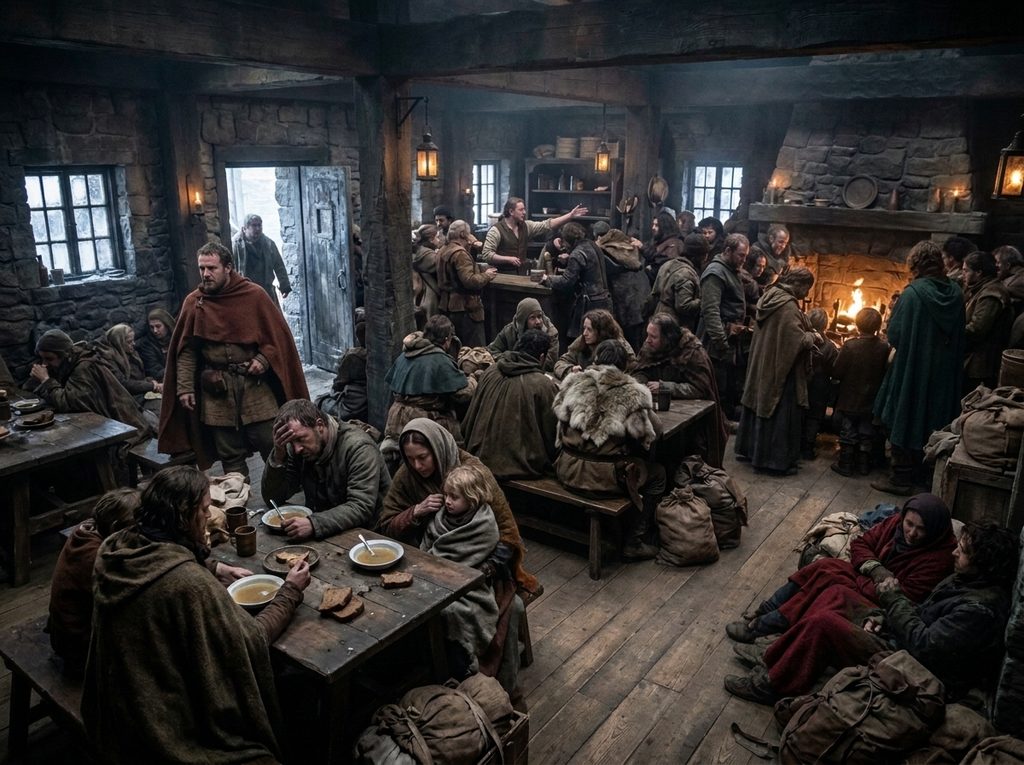
The Hearth and Lantern was crowded almost beyond capacity. Its common room overflowed with refugees, travelers, and townspeople seeking food and warmth. People occupied benches and trestle tables, while others sat on the floor or gathered near the fires. Large cauldrons of pottage simmered over the hearths, and the room smelled of bread, stew, and beer. Although the inn’s patrons were visibly worn by hardship, the atmosphere remained surprisingly cheerful.
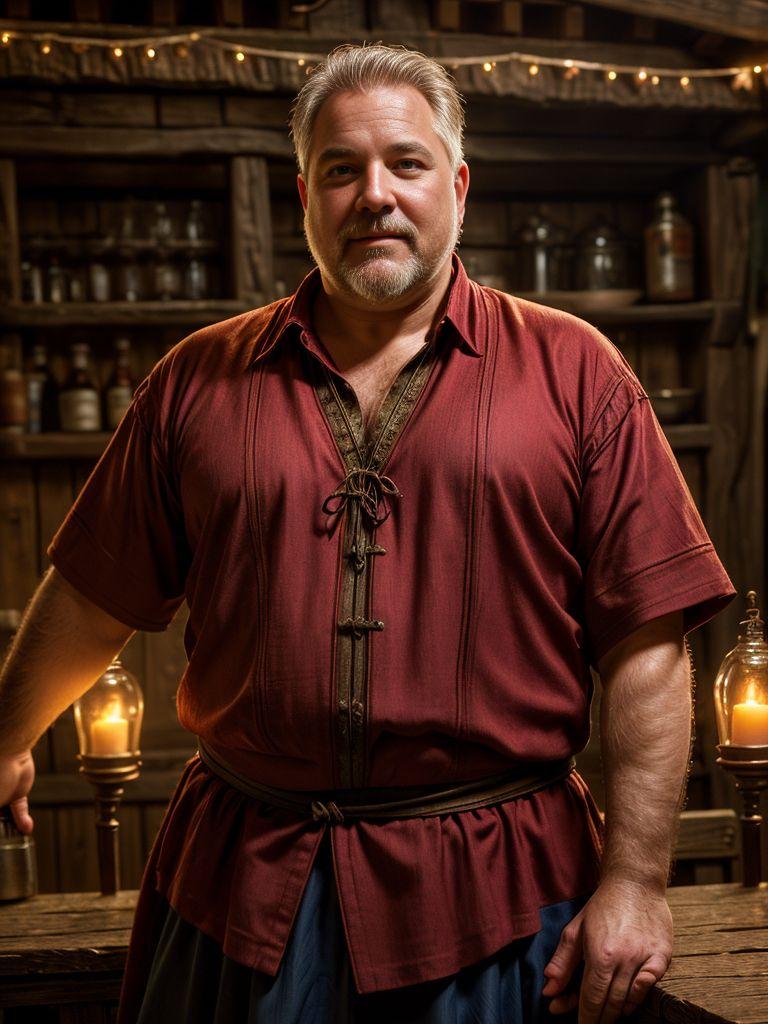
A busy serving woman managed to squeeze the adventurers onto a shared table and offered them the establishment’s limited menu. There was pottage, bread, and ale. Fortunately, there was enough of it. When the adventurers asked to speak with the proprietor, Miklos eventually appeared: A large, bearded man with a mischievous disposition, he immediately tested their claim that Captain Borislav had sent them. He deliberately provided an inaccurate description of the captain, apparently hoping to catch impostors who falsely claimed official introductions to obtain rooms. The party corrected him and mentioned Elmaro, Borislav’s silver-detecting pet. Satisfied, Miklos admitted that he had been keeping two adjoining rooms unoccupied, hoping to rent them to paying guests before the captain requisitioned them for additional refugees.
The adventurers agreed to pay five electrum pieces per night, including meals. They initially purchased four nights for twenty electrum pieces. Miklos was delighted to have paying customers. He offered them a round of beer and joined them at their table, discussing Krezk, its difficulties, and the growing number of refugees arriving from Vallaki. The party subsequently mentioned that they possessed three wolf pelts and two live chickens, which they hoped to sell or exchange. Miklos proposed an unusual bargain: He initially offered three bottles of wine from the Wizard of Wines vineyard, but the adventurers preferred additional lodging. So a revised agreement granted them three additional nights of accommodations and meals in exchange for the pelts and chickens. They now had an entire week of lodging secured. Miklos also agreed to keep the chickens alive, recognizing that laying hens were potentially more valuable than a single meal.
The proprietor ordered additional portions of stew for his new guests and instructed the serving staff to make certain they received generous helpings. Before long, their bread arrived accompanied by small pots of honey and clotted cream. The contrast between the adventurers’ comfortable treatment and the circumstances of the refugees around them did not go unnoticed. Some members of the party expressed unease at receiving special luxuries while so many others possessed almost nothing. The explanation was simple: the refugees were being fed through the town’s relief efforts, while paying customers could afford a few additional comforts. And, as someone observed, once the refugees started killing vampires, perhaps they could have clotted cream too.
Thus was born the evening’s enduring principle: Clotted cream is for closers.
Three Days of Rest and Recovery
For the first time in what seemed an eternity, the adventurers were able to rest in relative safety. They ate hot meals, drank decent beer, slept under proper roofs, and allowed their accumulated injuries to heal. During their stay, Grughilda continued taking the wolfsbane prescribed by Dr. Caedmon to prevent the development of lycanthropy. The treatment appeared effective. Her werewolf bite had been caught early, and after several days she began feeling substantially better.
The party also received permission to advance their characters to fourth level, representing their accumulated experience and their opportunity to train and recover in Krezk.
On the third day, they returned to Grilsha’s forge. The elderly smith had completed her commission. For Velkro, she produced a thin silver disc roughly the size of a coaster, edged in leather. It would provide a convenient source of metal for his Needle Darts spell.
For Tenzin, she had fashioned a pair of fingerless leather gloves with carefully mounted silver claws across the knuckles. The workmanship was excellent. The gloves fit tightly without preventing movement, and when Tenzen clenched his fists, the small silver projections extended just enough to make contact with an opponent. Grilsha assured him that she would repair damaged stitching or reattach loose claws without charge, provided he brought the pieces back. A dwarven warranty, she suggested, was among the most dependable guarantees in existence. The silver cestus would give Tenzin a means of exploiting the vulnerabilities of werewolves and other creatures susceptible to silver, addressing a serious limitation exposed during the fight at Ovidia’s bridge. The party had also acquired an improved way to use silver in magical ranged attacks.Their preparations were nearly complete.
The Question of What Comes Next
With their immediate needs addressed, the adventurers considered the larger purpose of their journey through Barovia. They still had several objectives suggested by Madame Eva’s Tarokka reading.
- The first was the legendary Sunsword, believed to be associated with a wizard’s tower standing beside a lake.
- Another was the Tome of Strahd, whose location was connected to a den of wolves in the mountains overlooking a lake.
- A third objective involved Argynvostholt, the ruined stronghold associated with the Order of the Silver Dragon and the Holy Symbol of Ravenkind.
There was also the Wizard of Wines vineyard, located to the south, where trouble had reportedly disrupted the production and distribution of wine throughout Barovia. And the party had not forgotten its obligation to return Ovidia’s borrowed wagon. These possibilities offered several directions for further exploration, but one nearby location demanded particular attention: the Old Abbey of Saint Markovia stood only half a day’s walk from Krezk. Its proximity made it potentially significant to the town’s defense. If hostile creatures occupied the abbey, they might be able to use the abandoned manor as a base for reconnaissance, infiltration, or a future assault against Krezk. The party therefore decided to investigate it. Before departing, however, they returned to Mother Izabela to learn what had happened there.
The Tragedy of the Old Abbey
Mother Izabela explained that the Old Abbey had originally been a nobleman’s manor. According to its history, an unnamed lord had bequeathed the estate to a devoted chambermaid named Marta, rewarding her years of faithful service. Marta had transformed the property into a refuge dedicated to the Morninglord, establishing a tradition of healing, charity, and hospitality. The sisters had continued this work for generations.
Then, approximately three years earlier, disaster struck. During the night, strange creatures assaulted the abbey. Izabela could remember little about their appearance beyond their vaguely humanoid forms. They possessed two arms and two legs, but they were neither vampires nor werewolves. They were bestial creatures that growled and snuffled, and their attack was overwhelmingly violent. Several sisters were killed almost immediately. The survivors fled, abandoning nearly everything they possessed. Only six sisters escaped. Those left behind were never seen again. Izabela believed they had been killed, perhaps even eaten by their attackers.
The surviving nuns eventually established the New Abbey within Krezk, continuing their ministry among the town’s increasingly desperate population. Approximately a year and a half earlier, a group of Morninglord devotees had attempted to reclaim the Old Abbey. They never returned. Izabela therefore regarded the property as lost. She warned the adventurers that attempting to retake it would be exceedingly dangerous. Indeed, she could not in good conscience encourage them to go. The party, however, was increasingly convinced that the abbey’s proximity to Krezk made its occupation by hostile creatures an intolerable strategic risk.
A Reconnaissance of the Abbey
Despite Izabela’s concerns, the adventurers continued questioning her about the manor’s layout. She described an L-shaped stone building consisting of residential quarters and an attached chapel, with a courtyard connecting its two wings. The grounds included gardens, a cemetery, a well, and an approach through a gatehouse. The manor had originally been fortified, although its defensive structures were no longer maintained. Izabela knew of no secret passages. There were multiple entrances, including doors leading toward the gardens and courtyard. She doubted that any particularly valuable religious relics remained inside, but she indicated that the sisters would welcome the return of anything sacred to the Morninglord if the adventurers happened to find it.
Her greatest concern, however, remained the party’s safety. She had seen companions killed during the attack, and the memory clearly continued to haunt her. The adventurers thanked her and prepared to depart. Their objective was no longer simply to examine an abandoned religious site. They intended to eliminate whatever danger occupied the Old Abbey and, if possible, restore it to the Sisters of the Morninglord.
Into the Mountains
The following morning, the fourth day after their arrival in Krezk, the adventurers set out on foot. They left the borrowed wagon behind, arranging for Krezk’s authorities to safeguard it and potentially return it to Ovidia when another supply expedition traveled in that direction. At the gates, they observed several armed wagons departing the town. These belonged to Krezk’s scavenging brigades, groups of scouts, rangers, and armed escorts sent into the countryside to locate food and supplies. Some returned with provisions. Others did not return at all. The brigades were one of the reasons Krezk had managed to avoid starvation despite the enormous influx of refugees.
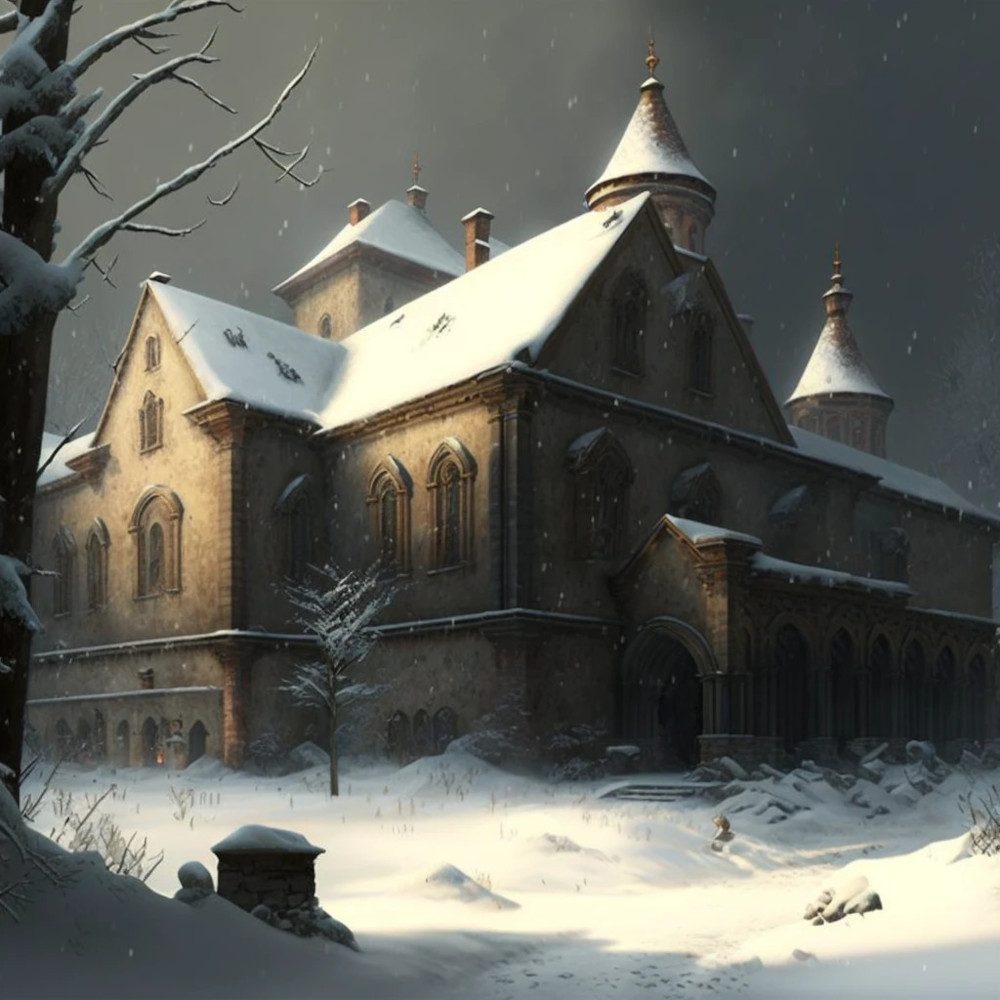
The adventurers continued along the road toward the Old Abbey. As they climbed into the mountains, the air became noticeably colder.Patches of snow began appearing beside the road, eventually merging into a more substantial covering. By the time the Old Abbey came into sight, snow lay across much of the surrounding landscape.
The structure stood upon an elevated shelf of rock, with a winding approach leading upward toward its entrance. From a distance, the manor appeared deserted. Its grounds were overgrown, portions of the exterior had deteriorated, and broken windows revealed glimpses of the chapel’s interior. Yet it remained a substantial stone building and with repairs, it might still serve as a defensible position.
That possibility reinforced the party’s earlier concerns. An enemy force occupying the abbey could establish a formidable outpost overlooking the approaches to Krezk.
Tracks in the Snow
The adventurers approached cautiously, examining the snow for signs of activity. At first, there seemed little evidence that anyone had recently occupied the site. Closer to the gatehouse, however, they discovered numerous tracks. Many belonged to wolves. These were unusually large animals, considerably bigger than the wolves encountered near Ovidia’s bridge. Interspersed among the canine footprints were smaller bipedal tracks, apparently made by creatures shorter than an ordinary human. The smaller tracks were difficult to interpret because the snow had partly melted and been disturbed. Curiously, the wolf tracks appeared to remain outside the abbey grounds. The smaller humanoid tracks, by contrast, were more evident near the gatehouse doors. This suggested that the creatures occupying the gatehouse might not be the same beings responsible for the wolf activity outside.The party also noticed a derelict wagon, broken and abandoned near the entrance.
Beyond the gatehouse stood the abbey’s cemetery. Several large monuments marked graves within the enclosure. One grave had been dug open and the excavated soil had been thrown behind a nearby monument, and a crude wooden implement lay beside the disturbed burial. The grave was not filled with snow. Someone had opened it recently.
The Sleeping Pigman
As the party examined the gatehouse, Tenzin approached one of its doors. Listening carefully, he heard what sounded like snoring. The door was unlocked and apparently untrapped. When the adventurers opened it, cold air rushed into a small chamber containing a crude bed. The occupant stirred beneath his blankets. He was a bizarre creature resembling a cross between a man and a pig. Approximately five feet tall, he possessed a porcine face, humanoid limbs, and an unmistakably animal appearance. The creature appeared confused and alarmed by the intrusion. As he struggled out of bed, he reached for a rusty, improvised knife.
The adventurers considered the possibility that he was simply a squatter rather than an inherently hostile creature. Velkro called for him to surrender, but the creature continued reaching for its weapon and making incomprehensible squealing sounds. Akuta also attempted to communicate, urging the creature to stand down. But there was no indication that the pigman understood.
Several adventurers decided that capturing him alive would be preferable to killing him outright. Tenzin stepped forward. He assumed his fighting stance and delivered a rapid sequence of nonlethal blows. The attacks were devastating. Before the pigman could even get out of bed, Tenzen struck him repeatedly on the head, rendering him unconscious. His crude knife fell to the floor. Velkro then bound his hands and feet, intending to keep him alive for later questioning.
The captive’s possessions revealed little. He wore crude burlap garments, with torn pages from old books stuffed beneath them for insulation. His footwear was equally primitive, and his knife was little more than a sharpened piece of scrap metal wrapped to form a handle. The creature appeared impoverished, filthy, and decidedly unusual. For the moment, however, the party had secured its first prisoner without bloodshed.

A Second Creature Behind the Door
Meanwhile, Zanderius had taken position near another gatehouse door. He heard movement behind it. When something attempted to open the door, Zanderius held it shut. The creature on the other side proved insufficiently strong to force its way out.
Eventually, the adventurers opened the door themselves. The occupant was another bizarre humanoid. This one resembled a frog rather than a pig, with large amphibian eyes and similarly crude clothing. He carried a hammer and appeared equally distressed by the party’s intrusion.
Grughilda struck him with the flat of her weapon, deliberately attempting to incapacitate rather than kill him. The blow injured the creature but did not immediately render him unconscious. Xanderius attempted to follow with an attack of his own, then abruptly closed the door again. The frogman began trying to force it open, producing a succession of rattling noises and heavy impacts.
The party reorganized. Eventually, Zanderius reopened the door and struck the creature with his war gavel. The blow rendered the frogman unconscious, and Grughilda secured him with his own blanket.
Now the adventurers possessed two living captives. Neither had successfully communicated with them. Neither had proven especially formidable in combat. And both appeared to be strangely animalistic humanoids inhabiting the abandoned gatehouse. Their existence raised more questions than it answered.

A Disturbing Message Among the Graves
While the others dealt with the gatehouse occupants, Akuta explored the nearby cemetery. He discovered an unusual message painted in black upon a weathered gravestone. The inscription read:
“Dead trusts him.”
The original inscription beneath the paint had deteriorated beyond recognition. The message appeared comparatively recent, although its meaning was far from obvious. Akuta attempted to interpret it, considering whether it referred to some individual trusted by the dead or whether the words concealed a more obscure meaning. No immediate explanation presented itself. His examination of the nearby disturbed grave revealed additional peculiarities. The grave had apparently been opened only a couple of days earlier, after the most recent snowfall. The soil beneath indicated that a body had once been buried there without a coffin. That body was now missing. Moreover, several other graves in the cemetery possessed weathered headstones but appeared to have been disturbed or reused more recently than the stones themselves suggested.
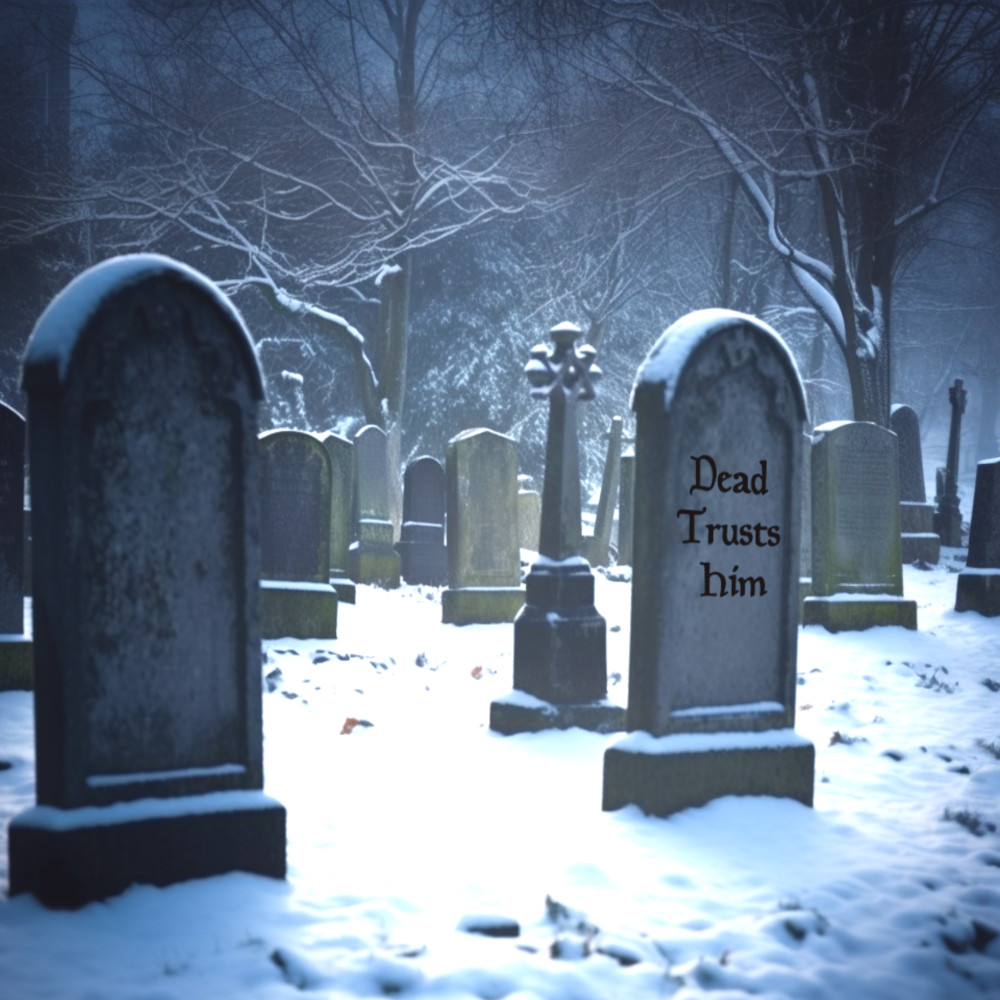
The implication was troubling. Someone might have been removing older remains, placing new bodies in the graves, or excavating corpses for purposes unknown. The party had not yet established what was happening. Nevertheless, the disturbed cemetery, the mysterious inscription, and the strange inhabitants of the gatehouse suggested that the Old Abbey concealed dangers considerably more complicated than an ordinary infestation of monsters.
Two Prisoners and Many Questions
With both gatehouse occupants incapacitated, the adventurers secured their prisoners. The pigman was bound and gagged, while the frogman was restrained separately. Neither had been killed. The party had not yet determined whether the creatures were responsible for the attack on the sisters three years earlier, whether they were servants of some more powerful occupant, or whether their presence was entirely unrelated to the abbey’s violent history. Nor had they established why the cemetery had been disturbed.
The chapel, residential quarters, and most of the abbey grounds remained unexplored. As the evening concluded, the party stood inside the outer grounds of the Old Abbey, having encountered its first inhabitants and discovered evidence of recent, unexplained activity. They had succeeded in taking the gatehouse without suffering meaningful injury. But their exploration had only just begun.
NOTES
- The party left for the Old Abbey on the morning of the 4th day in Krezk.
- The damage done to the Pigman is entirely non-lethal, the frogman mostly non-lethal.