RECAP: War of the Burning Sky, 2-8-26
The group, initially teleported behind enemy lines with the help of a fire mage named Larkin, intended to reach the village of Eresh to investigate the legendary artifact called the Torch of the Burning Sky. However, their teleportation was intercepted by a powerful magical trap set in the Mwangi Expanse, and they find themselves imprisoned in a bamboo cage surrounded by hostile Mwangi and their allies.
The party meets Rahi Kito, the mpataji (in Mwangi, a “finder of lost paths”) of the village Mkiwa, who questions their purpose and, after confirming their non-alliance with the enemy Sargavans, escorts them into the village.
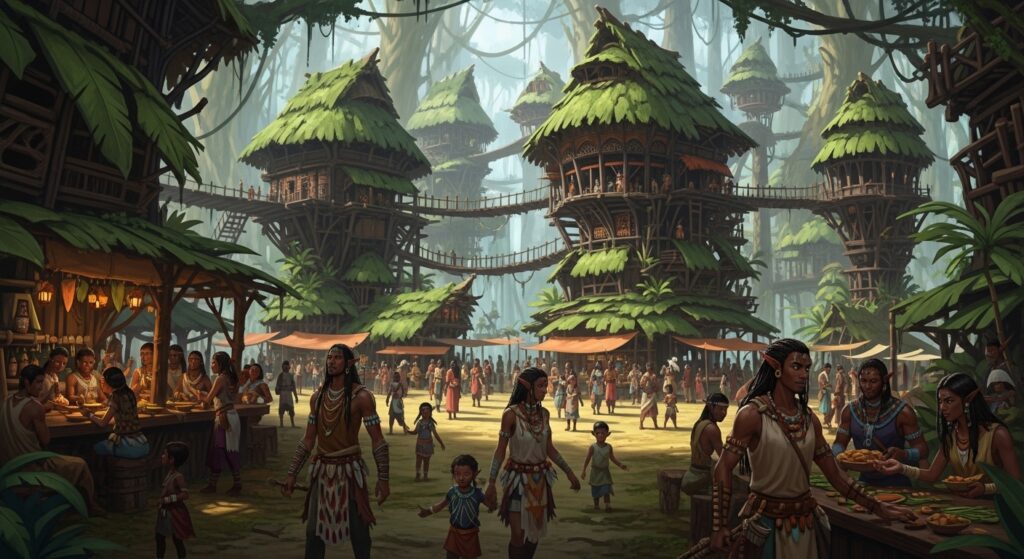
Mkiwa is a prosperous, mixed settlement of humans and ekujae elves, actively supporting resistance efforts against the Sargavans by serving as a major transshipment point. The party is introduced to the village’s spiritual leader, the powerful half-elf priestess Thuthe, whose primal magic emanates a zone of truth, compelling honesty. Thuthe welcomes the party as allies and grants them safe passage, understanding their mission’s urgency.
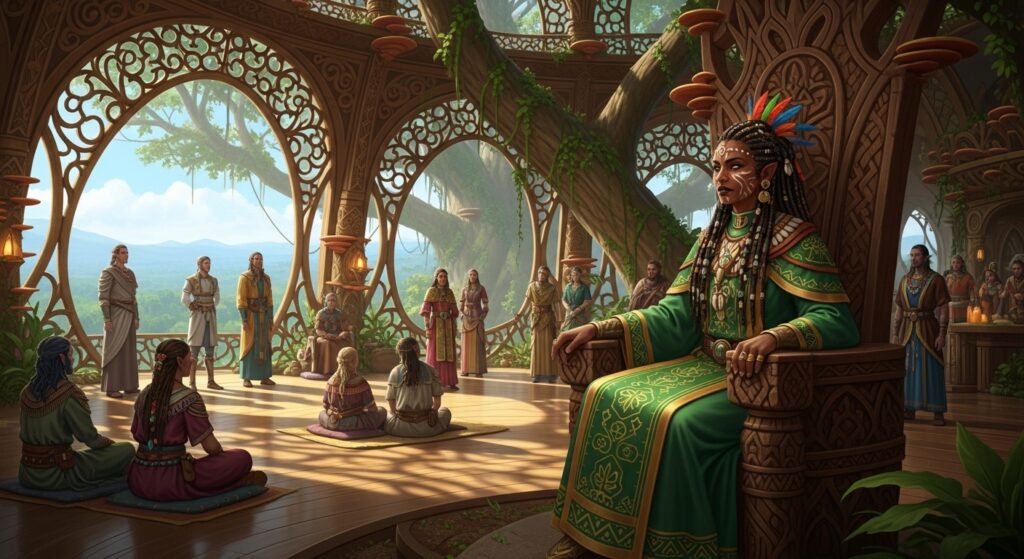
The party also meets Onadmammin, the young and somewhat insecure military and political leader (kanali) of Mkiwa, who is eager to hear news from Seaquen and the frontlines. He expresses willingness to support their cause if the monks at the Monastery of Two Winds, particularly a monk named Pilus, deem them worthy. The philosophical contrast between the two monk brothers, Pilus and Longinus, is explored, symbolizing differing approaches to adversity: resilience versus active combat.
After receiving supplies, maps, and warnings about Sargavan patrols and dangers of the jungle, the party sets out for Eresh through the dense, hot, and humid jungle terrain. As they advance, the atmosphere grows foreboding with reduced animal sounds and the discovery of unusual (for the jungle) mechanical traps not typical of the Mwangi, hinting at hidden dangers.
Their journey is soon interrupted by an ambush consisting of Sargavan soldiers, a goblin, and a worg. The party reacts swiftly with tactical spellcasting, including invisibility, webs, obscuring mist, and fire spells, engaging in a complex and intense combat encounter. The fight features stealth maneuvers, magical attacks, stunning fists, and strategic positioning, with the party overcoming the ambushers despite taking some damage and navigating mechanical traps.
As the battle unfolds, additional enemies appear, including archers hidden in the jungle canopy. The party uses a mix of ranged attacks, area spells, and supportive abilities like spiritual weapon and buff spells to maintain the upper hand. The combat is dynamic and vivid, with moments of dramatic tension such as a fireball narrowly missing one of the party members, a pit trap capturing a foe, and a mirror image spell providing a brief tactical advantage to the enemy.

The session ends with the party continuing the battle, with a few remaining enemies continuing to fight.
Key Insights
- Teleportation Trap and Strategic Interception: The teleportation trap set by the Mwangi at the Mwangi Expanse is a sophisticated magical defense designed to catch unauthorized intruders, particularly Sargavan commandos. This shows the Mwangi’s vigilance and the layered complexity of territorial control in this war-torn jungle region. The trap’s ability to redirect teleportation spells reveals advanced magical knowledge and strategic territorial defense.
- Diplomatic Nuance in Hostile Territory: Rahi Kito’s role as mpataji and his careful questioning highlight the delicate balance of trust and suspicion in wartime diplomacy. His acceptance of the party as allies, despite their sudden and suspicious arrival, underscores the importance of clear communication and reputation in hostile or unknown regions. The interplay between cultural titles and roles suggests a deeply structured society valuing honor and deeds.
- Primal Magic and Zones of Truth: The priestess Thuthe’s potent primal magic, manifesting as a zone of truth, enforces honesty and transparency during the party’s interrogation, revealing her spiritual authority and the intertwining of magic and governance. This magical effect not only shapes social interactions but also serves as a security measure, deterring deception and subterfuge in sensitive matters.
- Logistical Support and War Effort Coordination: Mkiwa’s role as a transshipment point for supplies and troops illustrates the logistical backbone essential to sustained resistance against the Saravans. The village’s prosperity amid war indicates effective resource management and community resilience, while the warnings about Saravan patrols reveal the ongoing threat of guerrilla warfare tactics in the jungle.
- Unusual Enemy Tactics and Mechanical Traps: The presence of heavy mechanical traps, unlike traditional Mwangi snares, suggests Sargavan or allied forces employing foreign technology or mercenaries, increasing the danger and unpredictability of jungle travel. This shift in warfare tactics signals an escalation in the conflict and potential new threats that require adaptation by the party.
- Complex Combat Dynamics and Team Coordination: The ambush encounter demonstrates the party’s tactical versatility, combining spellcasting, stealth, and melee combat to neutralize threats. The use of obscuring mist, webs, and area fire spells alongside monk abilities reveals a high level of player coordination and strategic planning, emphasizing the value of diverse skill sets and teamwork in overcoming formidable opponents.
- Environmental Impact of Magic in Combat: Titus’s fireball spell not only deals massive damage but also introduces the risk of starting a jungle fire, highlighting the consequences of using powerful magic in sensitive ecosystems. This environmental consideration adds depth to combat decisions, where collateral damage can influence future movement, resources, and local alliances.
Additional Observations
- The philosophical contrast between the monks Pilus and Longinus, representing active confrontation versus serene endurance of adversity, serves as a thematic underpinning for the party’s journey and the larger conflict. This duality may foreshadow future ideological challenges or choices.
- Onadmammin’s characterization as a young leader with big shoes to fill introduces internal political tensions within Mkiwa, suggesting potential future narrative arcs involving leadership, legacy, and the pressures of war.
- The session’s rich descriptions of the jungle environment—hot, humid, teeming with dangers both natural and magical—create an immersive setting that affects both tactical considerations and role-playing opportunities.
- The interplay between magical detection (e.g., detect magic, zone of truth) and mundane skills (perception, disable device) underlines the importance of balanced party capabilities in a high-stakes exploration and combat scenario.